
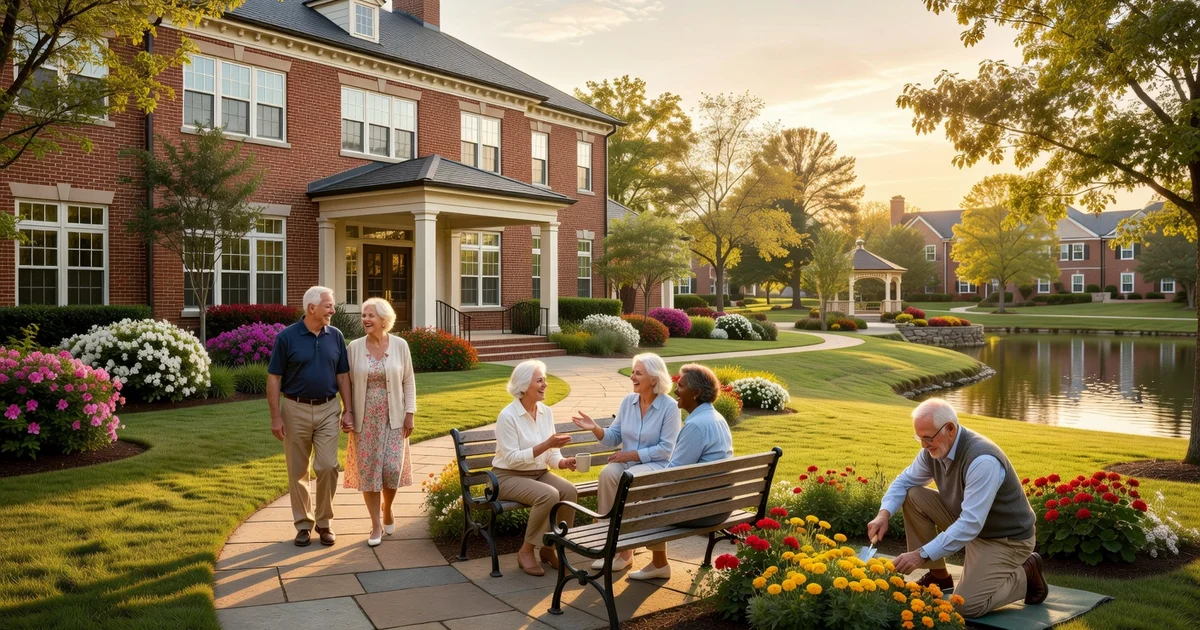
Finding the best continuing care (CCRC) in Charlotte, NC requires careful consideration of location, lifestyle preferences, and long-term care needs. Charlotte's growing senior population of 95,350 residents aged 65 and older - representing 10.8% of the city's 886,283 residents - has driven demand for comprehensive retirement communities that offer a full continuum of care from independent living through skilled nursing.
Continuing Care Retirement Communities (CCRCs) provide a unique advantage: residents can age in place while transitioning seamlessly between care levels as their needs change. In Charlotte, these communities combine the city's renowned Southern hospitality with proximity to world-class healthcare facilities like Atrium Health Carolinas Medical Center and Novant Health Presbyterian Medical Center. With the median household income at $78,438, many Charlotte families are exploring CCRCs as a way to plan comprehensively for retirement and future care needs.
This guide examines the landscape of continuing care options in Charlotte, helping families understand what to expect in terms of costs, amenities, neighborhoods, and care services. Whether you're planning ahead for yourself or helping a loved one transition to a supportive community, you'll find essential information to make an informed decision about continuing care (CCRC) Charlotte communities.
General CCRC Options in South Charlotte
South Charlotte neighborhoods like Ballantyne and South Park offer convenient access to upscale shopping, dining, and medical facilities.
The South Charlotte area has become increasingly popular for continuing care retirement communities due to its well-established neighborhoods, excellent healthcare access, and vibrant lifestyle amenities. Communities in this region typically offer independent living apartments and cottages, assisted living residences, memory care neighborhoods, and skilled nursing facilities all on one campus.
Residents benefit from proximity to Atrium Health Pineville, Carolina Place Mall, and the Ballantyne area's numerous restaurants and cultural venues. The neighborhoods of Myers Park, South Park, and Ballantyne are particularly sought-after for their tree-lined streets and convenient access to I-485 and I-77. Many CCRCs in this area feature resort-style amenities including fitness centers, swimming pools, walking trails, and chef-prepared dining. Monthly fees for entrance-fee CCRCs typically include housing, amenities, and future care guarantees, with costs varying based on apartment size and contract type. Contact individual communities for current pricing and contract options.
CCRC Communities Near University Area
University area communities provide access to UNC Charlotte cultural events and medical facilities while maintaining a suburban feel.
The University area of Charlotte, centered around UNC Charlotte, offers continuing care retirement communities that blend suburban tranquility with access to academic and cultural programming. This northeast Charlotte location provides residents with opportunities to attend university lectures, concerts, and sporting events while enjoying proximity to quality healthcare facilities.
Communities in this area typically feature spacious campuses with walking paths, gardens, and outdoor recreation areas. The University area offers convenient access to University Hospital and numerous shopping centers along University City Boulevard and W.T. Harris Boulevard. Residents appreciate the area's established neighborhoods and easy highway access via I-85 and I-485. CCRCs here often emphasize lifelong learning programs, partnering with UNC Charlotte for educational opportunities. The continuum of care ensures residents can transition from independent living to higher levels of support without leaving the community. Contact communities directly for information about entrance fees, monthly service packages, and refund policies.
Lake Norman Area CCRCs
Lake Norman communities offer waterfront living with boating, fishing, and outdoor recreation in a resort-like environment.
The Lake Norman region, located north of Charlotte in areas like Cornelius and Huntersville, has become a premier destination for continuing care retirement communities. These communities capitalize on the area's natural beauty, offering residents stunning lake views, water activities, and a relaxed lifestyle while maintaining proximity to Charlotte's urban amenities.
CCRCs near Lake Norman typically feature enhanced outdoor amenities including lakefront walking trails, fishing piers, and sometimes private boat slips. The area provides easy access to Novant Health Huntersville Medical Center and Lake Norman Regional Medical Center. Residents enjoy exploring the charming downtown areas of Davidson, Cornelius, and Huntersville, which offer boutique shopping, waterfront dining, and community festivals. The communities in this region often attract active retirees who prioritize outdoor recreation and a resort-style retirement experience. The full continuum of care ensures that as residents' needs change, they can access assisted living, memory care, and skilled nursing services on the same campus. Contact communities for details on entrance fee structures and monthly costs.
Uptown and Central Charlotte CCRCs
Central Charlotte locations offer urban convenience with walkable access to arts, culture, and medical centers.
Continuing care communities in central Charlotte and near Uptown provide an urban retirement lifestyle with unparalleled access to the city's cultural attractions, medical facilities, and entertainment venues. These communities appeal to seniors who want to remain engaged with city life while having comprehensive care services available.
Residents of central Charlotte CCRCs enjoy proximity to the Blumenthal Performing Arts Center, NASCAR Hall of Fame, museums, and professional sports venues. The location provides immediate access to Atrium Health Carolinas Medical Center, one of the region's premier healthcare facilities. Many communities in this area feature high-rise or mid-rise buildings with rooftop terraces, city views, and sophisticated dining venues. The urban setting allows residents to walk to restaurants, attend concerts, and participate in city events. Despite the urban location, these CCRCs maintain peaceful, secure environments with full continuum of care including independent living, assisted living, memory care, and skilled nursing. Transportation services typically supplement the walkable urban environment. Contact communities for pricing information and to schedule tours of their facilities and neighborhood.
East Charlotte and Matthews CCRCs
Matthews and East Charlotte communities provide small-town charm with lower costs while maintaining access to Charlotte amenities.
The Matthews and East Charlotte areas offer continuing care retirement communities in a more suburban, small-town atmosphere while remaining connected to Charlotte's resources. Matthews, in particular, is known for its historic downtown, community festivals, and family-friendly environment that extends to senior living options.
CCRCs in this region typically offer more spacious campuses with extensive outdoor areas, gardens, and walking trails. The location provides access to Novant Health Matthews Medical Center and is convenient to I-485 and I-74 for easy travel throughout the metro area. Residents enjoy Matthews' charming downtown area with its local shops, restaurants, and community events like the annual Alive After Five concert series. The area's slightly lower cost of living compared to South Charlotte or Uptown can translate to more competitive pricing for CCRC entrance fees and monthly costs. Communities here emphasize a neighborly atmosphere while providing the full spectrum of care from independent living through skilled nursing. Many feature cottage-style independent living options alongside traditional apartment buildings. Contact individual communities for specific pricing, contract types, and available floor plans.
How to Choose
Understanding Your Care Needs and Budget
Choosing the best continuing care (CCRC) in Charlotte, NC starts with an honest assessment of current and future care needs. CCRCs offer unique contracts - Type A (life care), Type B (modified), and Type C (fee-for-service) - that significantly impact long-term costs. Type A contracts typically have higher entrance fees but lock in monthly costs even as care needs increase, while Type C contracts have lower entrance fees but higher monthly costs when additional care is needed. Understanding these structures is essential for financial planning.
Charlotte's CCRC costs vary based on location, with communities in Ballantyne and South Park typically commanding premium pricing compared to Matthews or University area locations. Consider your budget not just for the entrance fee - which can range from $100,000 to $500,000 or more - but also for monthly fees that cover housing, dining, amenities, and varying levels of future care. With Charlotte's median household income at $78,438, many families work with financial advisors to evaluate whether a CCRC's entrance fee model makes sense compared to paying separately for independent living now and assisted living or nursing care later.
Location and Lifestyle Considerations in Charlotte
Charlotte's diverse neighborhoods offer distinct advantages for CCRC residents. South Charlotte communities provide upscale shopping at South Park and proximity to top-rated restaurants, while Lake Norman areas offer waterfront recreation and a resort atmosphere. Central Charlotte locations put cultural attractions like the Blumenthal Performing Arts Center and professional sports venues within easy reach, while Matthews and East Charlotte provide small-town charm with lower costs.
Consider proximity to family members, preferred healthcare facilities (Atrium Health Carolinas Medical Center, Novant Health Presbyterian, or Lake Norman Regional Medical Center), and lifestyle preferences. Charlotte's mild climate with four distinct seasons allows for year-round outdoor activities, so evaluate communities' outdoor amenities like walking trails, gardens, and covered patios. Transportation is also key - does the community provide scheduled trips to shopping, medical appointments, and cultural events?
Questions to Ask During CCRC Tours
When touring continuing care (CCRC) Charlotte communities, ask specific questions about contract types and what happens if you need to move to higher care levels. Request to see all levels of care - independent living, assisted living, memory care, and skilled nursing - to ensure quality is consistent across the campus. Ask about the financial stability of the community and request disclosure statements that detail the organization's finances.
Inquire about monthly fee increases over the past five years, refund policies if you leave or pass away, and whether priority access to higher care levels is guaranteed. Sample meals in the dining room, attend a resident activity or event, and if possible, speak with current residents about their experiences. Ask about staffing ratios in assisted living and nursing areas, and verify that the community is licensed and in good standing with North Carolina's Department of Health and Human Services.
Cost Comparison
Charlotte CCRC Costs vs. Traditional Senior Living
Understanding the financial structure of continuing care retirement communities requires comparing them to traditional senior living options in Charlotte. While CCRCs typically require substantial entrance fees, they offer long-term value by bundling future care costs. In Charlotte, assisted living averages approximately $5,192 per month, which is comparable to the national average of $4,995 monthly. Nursing home care in semi-private rooms averages $8,164 per month in the Charlotte area, significantly higher than assisted living.
CCRCs operate differently than traditional senior living: residents pay an entrance fee (which may be partially refundable depending on contract type) plus monthly fees that cover housing, meals, amenities, and varying levels of future care. A Type A life care contract might have an entrance fee of $250,000-$400,000 with monthly fees of $3,000-$5,000 that remain relatively stable even when moving to assisted living or nursing care. In contrast, paying separately for independent living now ($2,000-$3,500/month) and then transitioning to assisted living ($5,192/month average) or nursing care ($8,164/month average) can result in higher lifetime costs without the predictability of CCRC contracts.
Approximate Cost Comparison for Charlotte Area:
- Assisted Living: $5,192/month average (comparable to $4,995 national average)
- Nursing Home (semi-private): $8,164/month average
- CCRC Type A Contract: Entrance fee $200,000-$500,000+ plus monthly fees $3,000-$6,000 (includes future care)
- CCRC Type C Contract: Lower entrance fee $50,000-$150,000 plus monthly fees $2,500-$4,500 (pay market rates for higher care)
The value proposition of CCRCs becomes clearer for individuals who anticipate needing higher levels of care in the future. By locking in care costs through Type A or Type B contracts, residents protect against the significant expense increases associated with moving from independent living to nursing care. Families should calculate potential lifetime costs under different scenarios and consider factors like longevity, health status, and family history when evaluating whether a CCRC's entrance fee model provides financial advantages over traditional pay-as-you-go senior living options.
Frequently Asked Questions
What is the difference between a CCRC and regular assisted living in Charlotte?
How much does a CCRC cost in Charlotte, NC compared to other senior living options?
What are the best neighborhoods in Charlotte for CCRCs?
Are CCRCs in Charlotte a good investment for retirement?
How do I know if a Charlotte CCRC is financially stable?
Selecting the best continuing care (CCRC) in Charlotte, NC is a significant decision that requires careful evaluation of financial structures, location preferences, and long-term care needs. Charlotte's diverse neighborhoods - from the upscale amenities of South Charlotte to the waterfront lifestyle of Lake Norman and the urban convenience of central Charlotte - offer CCRC options to match varied retirement visions. With the city's senior population of 95,350 and growing, these communities provide comprehensive care continuums that allow residents to age in place with dignity and security.
The financial investment in a CCRC, while substantial, offers long-term value through predictable costs and guaranteed access to higher care levels as needs change. By understanding contract types, comparing costs against traditional senior living options like assisted living ($5,192/month average) and nursing care ($8,164/month average), and thoroughly vetting communities' financial stability, families can make informed decisions that provide peace of mind for years to come. Explore the continuing care retirement communities in Charlotte on Ultimate Senior Resource to find detailed information, schedule tours, and take the next step toward securing comprehensive retirement care in the Queen City.