
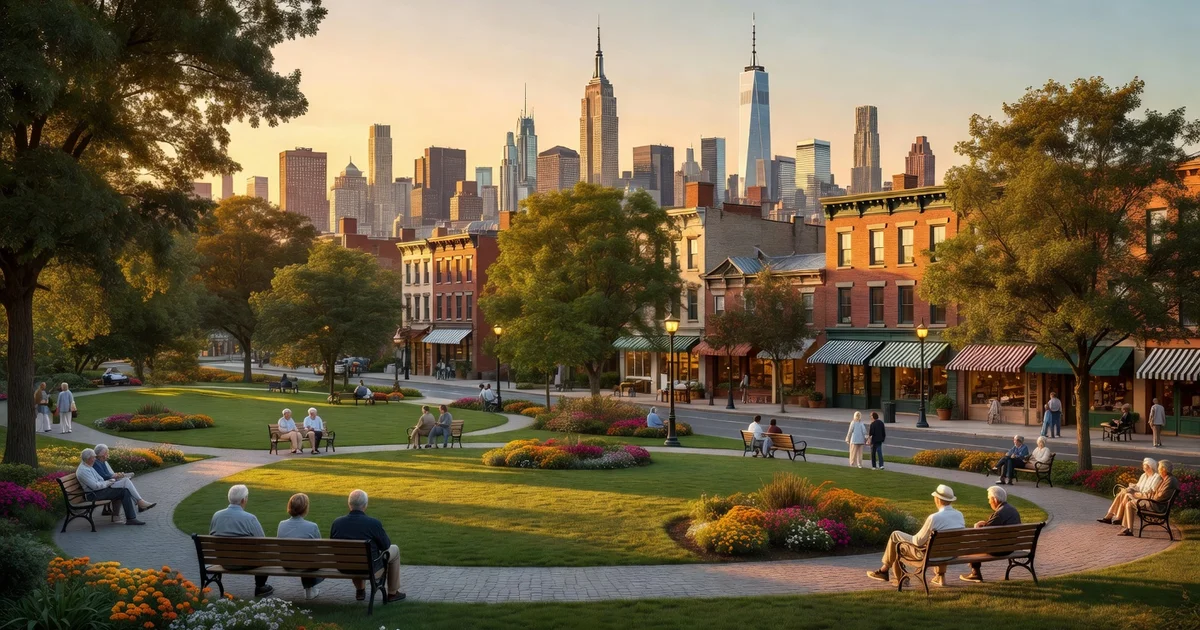
Finding the best senior living in New York, NY requires navigating one of the most dynamic and diverse senior care markets in the United States. With a senior population of over 1.3 million residents aged 65 and older—representing 16% of the city's 8.5 million people—New York offers an exceptional range of senior living options across all five boroughs, from luxury high-rise communities in Manhattan to neighborhood-focused care in Brooklyn, Queens, the Bronx, and Staten Island.
The cost of senior care in New York reflects the city's premium real estate market, with assisted living averaging $7,670 per month and nursing home care reaching approximately $12,060 monthly for semi-private rooms. These rates are significantly higher than the national average of $4,995 for assisted living, but they come with access to world-class healthcare systems including NewYork-Presbyterian, Mount Sinai, and NYU Langone, along with unparalleled cultural amenities, public transportation, and vibrant urban living.
This comprehensive guide examines the best senior living communities in New York, NY for 2026, covering assisted living, memory care, independent living, and skilled nursing options. We'll help you understand pricing structures, neighborhood considerations, and what makes each community unique in serving the needs of older adults and their families in America's largest city.
Upper East Side Senior Living Communities
Premier location near world-class medical centers and Central Park with comprehensive care options.
The Upper East Side remains one of New York's most sought-after neighborhoods for senior living, offering proximity to Hospital for Special Surgery, NewYork-Presbyterian/Weill Cornell Medical Center, and Mount Sinai Hospital. Communities in this area typically provide assisted living, memory care, and independent living options with high staff-to-resident ratios and concierge-level services.
Residents enjoy walkable access to Museum Mile, Central Park, and countless cultural institutions. Many communities feature rooftop terraces with park views, chef-prepared dining with kosher options, and robust activity calendars including partnerships with nearby Lincoln Center and Metropolitan Museum of Art. Transportation services provide easy access to medical appointments and shopping along Madison Avenue. Expect premium pricing in this neighborhood, with assisted living typically ranging from $8,000 to $15,000+ monthly depending on apartment size and care needs.
Brooklyn Heights and Park Slope Senior Residences
Charming brownstone neighborhoods with strong community feel and excellent healthcare access.
Brooklyn's historic neighborhoods of Brooklyn Heights and Park Slope offer senior living options that combine small-town charm with big-city amenities. These communities provide assisted living and memory care services with easy access to NYU Langone Hospital-Brooklyn and Methodist Hospital, both offering comprehensive geriatric care programs.
The area's tree-lined streets, proximity to Prospect Park and the Brooklyn Botanic Garden, and vibrant restaurant scene create an engaging environment for active seniors. Communities here often feature smaller, more intimate settings with 50-100 residents, personalized care plans, and strong connections to neighborhood synagogues, churches, and community centers. The Brooklyn Promenade and Brooklyn Bridge Park provide stunning waterfront access. Monthly costs for assisted living in these neighborhoods typically range from $7,000 to $12,000, with memory care units commanding slightly higher rates due to specialized staffing and secure environments.
Forest Hills and Rego Park Senior Communities
Queens locations offering excellent value with diverse cultural programming and strong transportation links.
Forest Hills and Rego Park in Queens provide some of New York's best value propositions for quality senior care, with assisted living options typically priced $1,000-$2,000 below Manhattan rates while maintaining high standards of care. These neighborhoods offer easy access to NewYork-Presbyterian Queens and Forest Hills Hospital, along with excellent public transportation via the Long Island Rail Road and multiple subway lines.
Communities in this area serve diverse populations with multilingual staff, kosher dining options, and programming that reflects the neighborhood's rich cultural tapestry. Residents enjoy proximity to Forest Park's 500+ acres, the Queens Botanical Garden, and thriving commercial districts along Austin Street and Queens Boulevard. Many communities offer independent living, assisted living, and memory care under one roof, allowing couples with different care needs to remain close. Amenities often include libraries, fitness centers with physical therapy services, and organized trips to Manhattan cultural events. Contact communities directly for current pricing, which generally ranges from $6,500 to $10,000 monthly for assisted living.
Riverdale Senior Living Options
Bronx neighborhood combining suburban tranquility with city access and competitive pricing.
Riverdale, located in the northwest Bronx along the Hudson River, offers a unique blend of parkland settings and urban convenience that appeals to seniors seeking a quieter environment while maintaining New York City access. Communities here provide assisted living, memory care, and skilled nursing services with proximity to Montefiore Medical Center, one of the nation's leading academic medical centers specializing in geriatric care.
The neighborhood's hilly terrain and abundant green spaces, including Van Cortlandt Park and Wave Hill Public Garden, create a resort-like atmosphere. Many senior living communities feature river views, outdoor walking paths, and partnerships with nearby Hebrew Home at Riverdale for specialized dementia care programs. The area's strong Jewish community supports robust programming including Shabbat services, while the diverse population ensures multicultural activities and dining options. Express bus service to Manhattan and local shopping along Riverdale Avenue provide convenience. Assisted living costs in Riverdale typically range from $6,000 to $9,500 monthly, offering good value compared to Manhattan while maintaining quality care standards.
Staten Island Senior Care Facilities
Most affordable NYC option with suburban feel, parking availability, and family-friendly visiting.
Staten Island provides New York City's most affordable senior living options while offering a distinctly suburban character that many families find appealing. Communities across the borough—from St. George near the ferry terminal to Tottenville on the southern shore—deliver comprehensive care including independent living, assisted living, memory care, and skilled nursing at prices often 20-30% below Manhattan rates.
Access to Staten Island University Hospital and Richmond University Medical Center ensures quality healthcare, while the borough's parks, beaches, and lower density create a relaxed atmosphere. Many communities feature parking facilities, making family visits easier for those driving from New Jersey or other boroughs. The Staten Island Ferry provides free, scenic transportation to Manhattan for cultural outings. Communities often include spacious grounds with gardens, outdoor seating areas, and activities like bocce ball and nature walks. Dining programs emphasize Italian-American cuisine reflecting the borough's heritage, alongside diverse options. Assisted living on Staten Island typically ranges from $5,500 to $8,500 monthly, with memory care and skilled nursing priced competitively. The borough's tight-knit communities often mean staff develop long-term relationships with residents and families.
Chelsea and Greenwich Village Senior Residences
Vibrant downtown Manhattan locations for LGBTQ+-friendly, culturally progressive senior living.
Chelsea and Greenwich Village have emerged as preferred locations for seniors seeking progressive, inclusive communities in the heart of Manhattan's most vibrant neighborhoods. These areas offer assisted living and independent living options that emphasize cultural engagement, LGBTQ+ affirmation, and active urban lifestyles with easy access to NYU Langone Health and Bellevue Hospital.
Communities in these neighborhoods feature contemporary design, rooftop terraces, and programming that includes theater outings, gallery visits, and partnerships with nearby New School and NYU for lifelong learning. The High Line park, Hudson River Park, and Union Square Greenmarket provide outdoor recreation and social opportunities. Many residences offer studio through two-bedroom apartments with modern finishes, communal dining spaces with chef-driven menus, and wellness centers with yoga and fitness classes. The neighborhoods' walkability and extensive public transportation make them ideal for active seniors who want to maintain independence. Pricing for assisted living in Chelsea and Greenwich Village typically ranges from $9,000 to $16,000+ monthly, reflecting premium locations and amenities. Contact communities directly for current availability and care options.
Astoria and Long Island City Memory Care Centers
Specialized dementia care in Queens with multilingual staff and family-centered approaches.
Astoria and Long Island City have developed strong reputations for memory care excellence, with several communities specializing in Alzheimer's and dementia services. These facilities employ evidence-based approaches including validation therapy, reminiscence programming, and secure outdoor spaces designed specifically for residents with cognitive impairment. Proximity to Mount Sinai Queens and Elmhurst Hospital provides access to geriatric psychiatry and neurology specialists.
The neighborhoods' diversity is reflected in multilingual care staff fluent in Greek, Spanish, Arabic, and Asian languages, ensuring culturally appropriate care and family communication. Many memory care units feature small household models with 12-15 residents per unit, creating intimate environments that reduce confusion and anxiety. Specialized programming includes music therapy, art therapy, and sensory gardens. The communities' locations near Astoria Park and the waterfront provide opportunities for supervised outdoor activities. Family education programs help caregivers understand disease progression and communication strategies. Memory care in these Queens neighborhoods typically costs between $8,000 and $13,000 monthly, depending on level of care required and apartment configuration. Most communities require assessment before admission to ensure appropriate care level placement.
How to Choose
How to Choose the Best Senior Living in New York, NY
Selecting senior living in New York requires careful consideration of factors unique to the city's complex landscape. Start by assessing care needs: Does your loved one need assistance with activities of daily living (bathing, dressing, medication management), or are they seeking independent living with services available as needed? Memory care requires specialized secure units with trained dementia care staff, while skilled nursing provides 24/7 medical supervision for complex health conditions.
Budget and Financial Planning for New York Senior Care
With assisted living in New York averaging $7,670 monthly—well above the national average—financial planning is critical. Request detailed pricing that includes base rent, care fees, and additional costs for services like medication management, incontinence care, or second-person assists. Many communities charge à la carte for care, which can add $1,000-$3,000 monthly to base rates. Explore Medicaid waiver programs for assisted living (available to eligible New York residents), veterans benefits, and long-term care insurance. Some communities offer entrance fee models with lower monthly costs, while others operate on straight monthly rental. Always clarify what's included: meals, utilities, activities, transportation, and housekeeping should be itemized.
Location Considerations Across New York's Five Boroughs
Location dramatically impacts both cost and lifestyle when choosing senior living in New York, NY. Manhattan communities offer unparalleled cultural access and medical facilities but command premium prices. Brooklyn neighborhoods provide strong community feel with better value, while Queens offers the city's most diverse programming and competitive pricing. The Bronx's Riverdale area combines parkland settings with city access, and Staten Island delivers the most affordable options with suburban character. Consider proximity to family members who will visit regularly, access to your loved one's current physicians and hospitals, and neighborhood walkability. Public transportation access matters even for non-drivers, as many communities organize group outings via subway and bus. Ask about neighborhood safety, nearby pharmacies and shops, and whether the community provides transportation to medical appointments.
Essential Questions to Ask During Tours
Tour multiple communities and ask specific questions: What is the staff-to-resident ratio during different shifts? How do you handle care transitions as needs increase? What is your move-out policy if skilled nursing becomes necessary? Request to see the actual apartment that would be available, not just a model. Eat a meal in the dining room and observe resident engagement and staff interactions. Ask about activity calendars, but also observe whether residents are actually participating. Inquire about COVID-19 protocols, visitor policies, and how the community communicates with families. Check if staff speak languages your loved one prefers and whether cultural or religious programming aligns with their background. Finally, request references from current resident families and check the community's inspection history with the New York State Department of Health.
Cost Comparison
Understanding Senior Living Costs in New York, NY
The cost of senior care in New York significantly exceeds national averages, reflecting the city's high cost of living and premium real estate market. Assisted living in New York averages approximately $7,670 per month compared to the national average of $4,995—a difference of nearly $2,700 monthly or $32,000 annually. This premium buys access to world-class healthcare systems, cultural amenities, and the ability to age in place within New York City.
New York Senior Living Cost Breakdown (2026 estimates):
- Assisted Living: $7,670/month average (range: $5,500-$16,000+ depending on borough and amenities)
- Memory Care: $8,500-$14,000/month (specialized dementia care with secure units and higher staffing)
- Independent Living: $4,500-$12,000/month (varies widely based on apartment size and location)
- Skilled Nursing (semi-private): $12,060/month average (24/7 medical care)
- In-Home Care: $30-$40/hour for home health aides (costs add up quickly for full-time care)
Geographic variation within New York is substantial. Manhattan's Upper East Side and downtown neighborhoods command the highest prices ($9,000-$16,000+ monthly for assisted living), while Staten Island and parts of Queens offer the most affordable options ($5,500-$8,500 monthly). Brooklyn and Bronx communities typically fall in the middle range ($6,500-$11,000 monthly). When comparing costs, always clarify what's included in base rates versus additional care fees, as New York communities often use tiered pricing models where care services are billed separately from room and board.
For families concerned about affordability, explore New York's Medicaid Assisted Living Program (ALP), which can help eligible seniors cover assisted living costs. Veterans may qualify for Aid and Attendance benefits adding up to $2,266 monthly for care expenses. Some communities offer respite stays or shared apartments at reduced rates. Remember that while New York senior living costs more upfront, it often eliminates expenses like separate housing, utilities, transportation, and meals—potentially making it cost-competitive with aging at home when all factors are considered.
Frequently Asked Questions
What is the average cost of assisted living in New York, NY in 2026?
Does Medicaid cover assisted living in New York?
Which New York neighborhoods are best for senior living?
What's the difference between assisted living and memory care in New York?
How do I know when it's time for senior living in New York?
Choosing the best senior living in New York, NY for 2026 means balancing cost, location, care quality, and lifestyle preferences in one of the world's most dynamic cities. From Manhattan's premium communities near world-class medical centers to Staten Island's affordable suburban options, New York offers exceptional diversity in senior care. With assisted living averaging $7,670 monthly and over 1.3 million seniors calling the city home, families have access to communities serving every cultural background, care need, and budget level.
The communities highlighted in this guide represent the range of quality options across all five boroughs, each offering unique advantages in location, amenities, and care approaches. Whether you prioritize proximity to top hospitals, cultural engagement, memory care expertise, or affordability, New York's senior living landscape provides solutions. Take time to tour multiple communities, ask detailed questions about care transitions and costs, and involve your loved one in decision-making when possible. Ultimate Senior Resource offers comprehensive listings and guidance to help you navigate New York's senior living options and find the perfect community for your family's needs.