
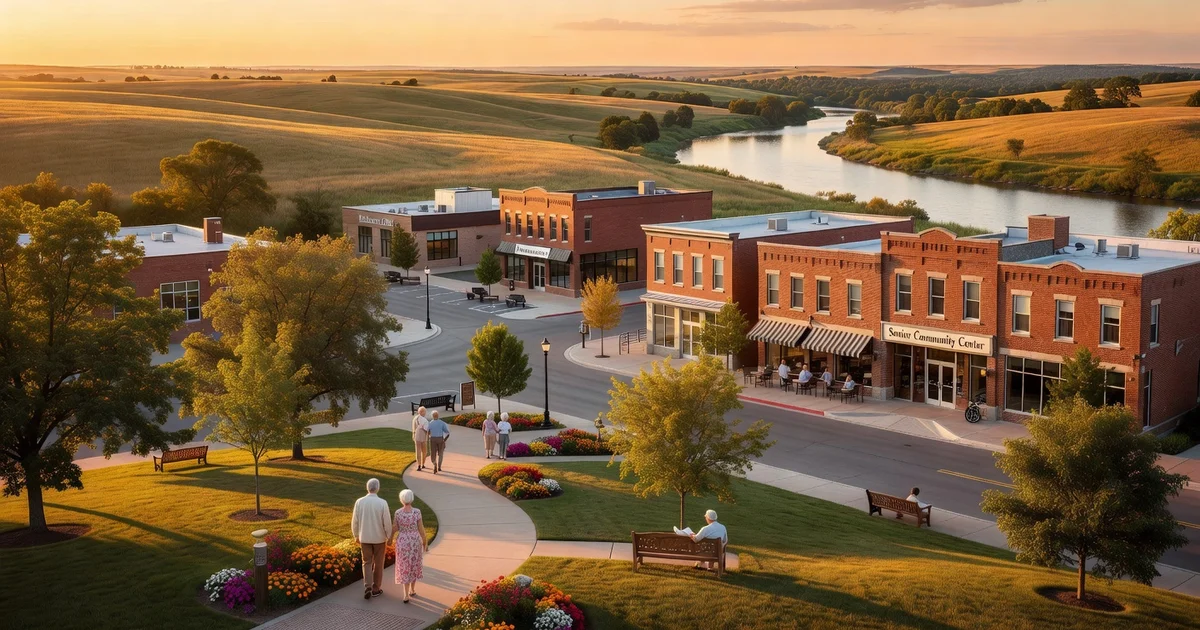
Nebraska offers safety, affordability, and community-focused living, making it a solid choice for retirees. Cities like Omaha, Lincoln, and Kearney feature low crime rates, top-tier healthcare, and welcoming neighborhoods. Seniors can choose between peaceful small towns or urban conveniences while enjoying the relaxed Midwest lifestyle.
What Are the Safest Places to Retire in Nebraska?
Omaha
- Violent Crime Rate: 5.6 per 1,000 people
- Property Crime Rate: 34.8 per 1,000 people
- Extreme Weather Risk: Moderate, with tornadoes and winter storms
- Summer: Highs in the mid-80s°F, with humidity that can feel sticky. Occasional thunderstorms may roll in, so keeping an eye on weather alerts is key.
- Winter: Temperatures drop to the 20s°F, with snow and ice common. Roads and sidewalks are well-maintained, but seniors should still be cautious of icy patches.
- Spring: Temperatures warm up, but thunderstorms and tornado risks increase. Community emergency systems help keep residents safe.
- Fall: Cooler temperatures and crisp air make it the calmest season, ideal for exploring parks and local trails.
Lincoln
- Violent Crime Rate: 3.9 per 1,000 people
- Property Crime Rate: 29.1 per 1,000 people
- Extreme Weather Risk: Moderate, with winter storms and occasional tornadoes
- Summer: Warm, with highs around 85°F. Thunderstorms can pop up, so staying prepared is a good idea.
- Winter: Cold, with temperatures often in the 20s°F. Light snow is common, and icy sidewalks can be a hazard.
- Spring: Comfortable but prone to rainstorms and tornado risks. The city’s well-developed safety systems help manage these risks.
- Fall: Mild and enjoyable, with fewer extreme weather events, making it a great time to explore outdoor attractions.
Kearney
- Violent Crime Rate: 3.4 per 1,000 people
- Property Crime Rate: 16.1 per 1,000 people
- Extreme Weather Risk: Low, with occasional storms
- Summer: Highs in the low 80s°F, with less humidity than other parts of Nebraska. Occasional storms may occur but are less frequent.
- Winter: Mild, with average temperatures in the 30s°F. Snowfall is light, making it easier to navigate.
- Spring: Comfortable temperatures, though rainstorms can occasionally disrupt plans.
- Fall: Dry and mild, making it the most predictable season for outdoor activities.
Grand Island
- Violent Crime Rate: 4.0 per 1,000 people
- Property Crime Rate: 25.4 per 1,000 people
- Extreme Weather Risk: Moderate, with tornadoes and hailstorms
- Summer: Highs in the upper 80s°F, with humid days and evening thunderstorms. Air conditioning is a must!
- Winter: Moderate snowfall and lows in the 20s°F. Winters can be cold with some snowfall and occasional icy conditions.
- Spring and Fall: Comfortable weather, though spring storms can include hail and strong winds.
Fremont
- Violent Crime Rate: 1.6 per 1,000 people
- Property Crime Rate: 22.2 per 1,000 people
- Extreme Weather Risk: Moderate, with tornadoes and flooding risks
- Summer: Highs in the 80s°F, with occasional humidity and thunderstorms.
- Winter: Snow and ice are common, but temps rarely drop below the 20s°F.
- Spring and Fall: Comfortable weather makes these seasons ideal for outdoor events and activities.
What Are the Best Healthcare Facilities in Nebraska for Seniors?
- Omaha: Nebraska Medicine offers advanced care in cardiology, oncology, and senior-focused telehealth services.
- Lincoln: Bryan Medical Center specializes in heart and vascular care, cancer treatment, and senior rehabilitation.
- Kearney: CHI Health Good Samaritan provides rural healthcare access with a focus on heart health and physical rehab.
Is Nebraska Senior-Friendly and Accessible?
Nebraska is a great option for retirees who put a premium on affordability, safety, and a relaxed lifestyle. Let’s summarize what Nebraska has going for it and factors that might make you make a U-turn:Pros
- Affordable Living: Nebraska’s cost of living is below the national average, so retirement dollars stretch further.
- Taxes: Nebraska does have a state income tax, but it also offers some tax breaks for retirees, such as a retirement income deduction. Property taxes are also generally lower than in many other states.
- Good Healthcare Access: Cities like Omaha and Lincoln offer top-tier hospitals, while rural areas still have dependable options.
- Outdoor Recreation: The state’s parks, lakes, and trails provide year-round opportunities for active seniors.
- Strong Community Programs: Many cities have senior centers offering social events, meal services, and wellness programs.
Cons
- Weather Challenges: Hot summers and cold winters can be tough to adjust to, especially with risks like tornadoes and snowstorms.
- Limited Transportation: Public transit is sparse outside larger cities, so you need to add a car to your cost of living in Nebraska.
- Isolation Risks: Rural areas may feel too quiet for some seniors, with fewer opportunities for socializing.