
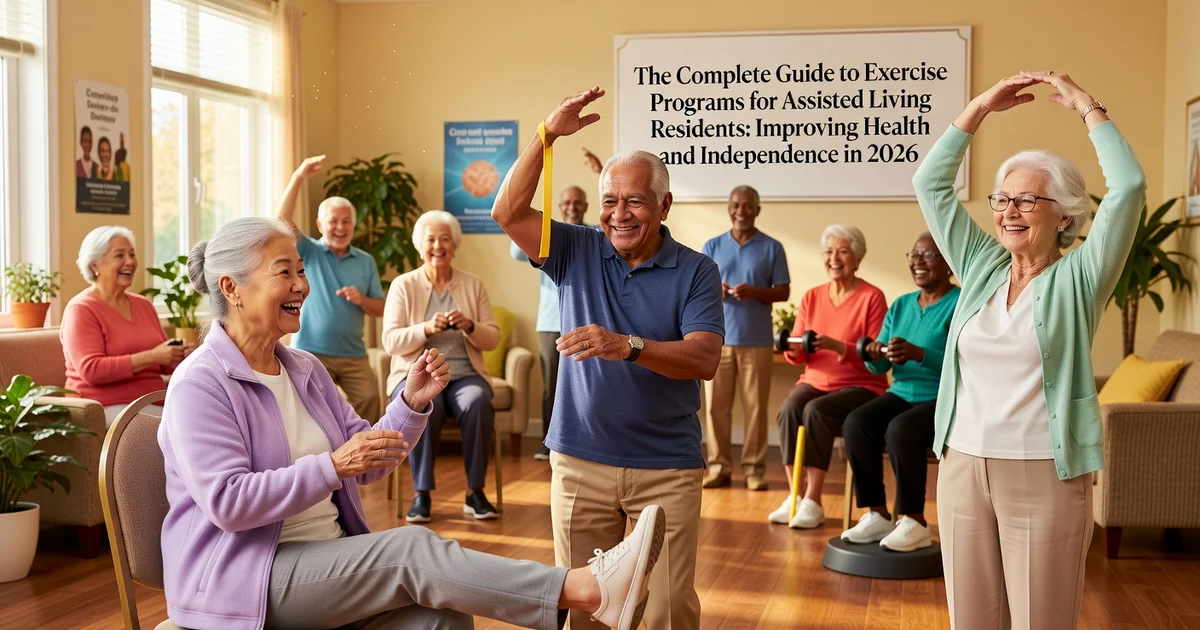
The Complete Guide to Exercise Programs for Assisted Living Residents: Improving Health and Independence in 2026
When 78-year-old Margaret moved into an assisted living community last year, her daughter Sarah worried that her mother's active lifestyle would come to an end. Margaret had always enjoyed morning walks and gardening, but recent balance issues and arthritis had made these activities increasingly difficult. Within three months of participating in her community's structured exercise program, Margaret regained confidence in her mobility, reduced her fall risk, and even made new friends in her water aerobics class.
According to the Centers for Disease Control and Prevention, falls are the leading cause of injury and death among older adults, with one in four Americans aged 65 and older falling each year. However, research published in the Journal of the American Geriatrics Society demonstrates that structured exercise programs can reduce fall risk by up to 23% among assisted living residents. These programs do more than prevent injuries—they enhance cognitive function, improve mood, maintain independence, and significantly boost quality of life.
This comprehensive guide explores the essential components of effective exercise programs for assisted living residents, helping you understand what to look for when evaluating senior care options for your aging parents. We'll cover evidence-based program types, safety considerations, how to assess quality, and practical steps for encouraging participation—empowering you to make informed decisions about eldercare that prioritize both safety and vitality.
Why Exercise Programs Matter in Assisted Living Communities
Physical activity isn't just about staying fit—for assisted living residents, it's a cornerstone of maintaining independence, preventing decline, and preserving quality of life. The benefits of structured exercise programs extend far beyond the physical realm, touching every aspect of daily living for older adults.
Physical Health Benefits
Regular exercise programs in assisted living settings deliver measurable health improvements. According to research from the National Institute on Aging, older adults who participate in consistent physical activity experience improved cardiovascular health, better bone density, enhanced muscle strength, and greater flexibility. These physical improvements translate directly into functional abilities: residents can dress themselves more easily, maintain continence longer, and perform daily tasks with less assistance.
The American Heart Association reports that even moderate exercise can reduce the risk of heart disease, stroke, and type 2 diabetes—conditions that disproportionately affect older adults. For residents managing chronic conditions like arthritis, appropriate exercise can actually reduce pain and stiffness while improving joint function.
Cognitive and Mental Health Advantages
Perhaps even more compelling are the cognitive benefits. A landmark study published in JAMA Internal Medicine found that older adults who engaged in regular physical activity showed slower rates of cognitive decline compared to sedentary peers. Exercise increases blood flow to the brain, promotes the growth of new neural connections, and may reduce the risk of dementia.
Mental health improvements are equally significant. Depression affects approximately 15-30% of assisted living residents, according to data from the National Institute of Mental Health. Structured exercise programs have been shown to reduce depressive symptoms, decrease anxiety, improve sleep quality, and enhance overall mood through the release of endorphins and increased social interaction.
Social Connection and Quality of Life
Group exercise classes create natural opportunities for socialization, combating the isolation and loneliness that many older adults experience. These social connections are vital—research from AARP indicates that social isolation can be as harmful to health as smoking 15 cigarettes per day. Exercise programs that incorporate group activities help residents build friendships, create routines, and maintain a sense of purpose and community engagement.
Types of Exercise Programs Offered in Assisted Living Facilities
Quality assisted living communities offer diverse exercise programming that addresses the varied needs, abilities, and preferences of their residents. Understanding these program types helps families evaluate whether a community can meet their loved one's specific needs.
Chair-Based Exercise Classes
Chair exercises are foundational programs suitable for residents with limited mobility, balance concerns, or those recovering from illness or injury. These seated workouts focus on upper body strength, core stability, and range of motion exercises. Participants use light weights, resistance bands, or simply their body weight to build strength without fall risk. Many residents appreciate that chair exercises allow them to participate fully regardless of physical limitations, promoting inclusion and confidence.
Walking and Ambulation Programs
Supervised walking programs are among the most accessible and beneficial activities for assisted living residents. These may include indoor walking clubs that navigate community hallways, outdoor nature walks on accessible paths, or mall-walking groups. According to the American College of Sports Medicine, walking just 30 minutes most days can improve cardiovascular health, maintain bone density, and support healthy weight management. Progressive programs might start with short distances and gradually increase duration and intensity based on individual capabilities.
Balance and Fall Prevention Classes
Specialized balance training programs like Tai Chi, the Otago Exercise Program, or A Matter of Balance curriculum have strong evidence supporting their effectiveness. The National Council on Aging reports that Tai Chi can reduce falls by up to 45% among older adults. These programs typically include exercises that challenge balance systems, strengthen stabilizing muscles, improve proprioception, and build confidence in movement. Many communities offer these classes two to three times weekly with certified instructors trained specifically in fall prevention.
Strength Training and Resistance Exercise
Contrary to common misconceptions, strength training is highly beneficial and safe for older adults when properly supervised. Programs may use resistance bands, light dumbbells, weight machines adapted for seniors, or bodyweight exercises. The key is appropriate intensity and form. Research published in the Journal of Aging and Physical Activity shows that even adults in their 80s and 90s can build muscle mass and strength through consistent resistance training, which directly supports functional independence.
Aquatic Exercise and Water Aerobics
For communities with pool facilities, water-based programs offer unique advantages. The buoyancy of water reduces stress on joints while providing natural resistance for strengthening. Water temperature is typically maintained at therapeutic levels (82-88°F) to ease arthritis pain and promote circulation. Aquatic programs are particularly beneficial for residents with arthritis, obesity, or those recovering from joint replacement surgery. Many participants who cannot tolerate land-based exercise thrive in water programs.
Specialized Programs for Memory Care
Residents with dementia or Alzheimer's disease benefit from adapted exercise programs that incorporate familiar movements, music, and sensory stimulation. These programs often use simple, repetitive motions, clear verbal cues, and positive reinforcement. Research from the Alzheimer's Association indicates that regular physical activity may slow cognitive decline and reduce behavioral symptoms in dementia patients while improving caregiver quality of life.
Essential Components of Safe and Effective Exercise Programs
Not all exercise programs are created equal. When evaluating assisted living communities for your aging parents, understanding the hallmarks of quality programming helps ensure your loved one will receive safe, effective, and engaging physical activity opportunities.
Qualified and Certified Instructors
The expertise of fitness staff makes a critical difference in program safety and effectiveness. Look for communities that employ instructors with relevant certifications such as Certified Senior Fitness Specialist, Certified Personal Trainer with senior specialization, or credentials from organizations like the American Council on Exercise or National Academy of Sports Medicine. Equally important is experience working specifically with older adults and understanding age-related conditions, medications, and physical limitations.
Individualized Assessment and Programming
Quality programs begin with individual fitness assessments that evaluate current mobility, strength, balance, endurance, and any medical restrictions. This baseline assessment should inform personalized exercise recommendations and modifications. The best communities conduct regular reassessments (typically every 3-6 months) to track progress and adjust programming accordingly. This individualized approach ensures residents are challenged appropriately without being pushed beyond safe limits.
Medical Integration and Safety Protocols
Exercise programming should integrate with overall health management. This means fitness staff communicate regularly with nursing staff and physicians about resident health changes, and exercise recommendations align with medical care plans. Communities should have clear protocols for medical emergencies during exercise, including staff trained in CPR and first aid, accessible emergency equipment, and procedures for when to stop activity and seek medical attention. Blood pressure monitoring before and after exercise may be appropriate for residents with cardiovascular conditions.
Variety and Engagement Strategies
Adherence to exercise programs depends heavily on engagement and enjoyment. Effective programs offer variety in activity types, times, and formats to accommodate different preferences and schedules. Some residents prefer morning classes while others have more energy in the afternoon. Music, games, and social elements increase enjoyment and participation. According to research in the Journal of Applied Gerontology, older adults are significantly more likely to maintain exercise habits when programs are enjoyable and socially engaging rather than purely functional.
Progressive Challenge and Modification
As residents build strength and confidence, programs should offer progressive challenges to continue delivering benefits. Simultaneously, instructors must skillfully modify exercises for varying ability levels within group classes. This might mean offering three versions of each exercise—seated, standing with support, and standing independently—allowing everyone to participate at their appropriate level. The ability to scale difficulty both up and down as residents' conditions change is a hallmark of quality programming.
Accessibility and Inclusive Design
Physical spaces matter significantly. Exercise areas should be easily accessible, well-lit, temperature-controlled, and free of tripping hazards. Equipment should be senior-friendly with large, easy-to-grip handles, stable bases, and clear instruction labels. Flooring should provide cushioning while preventing slips. Adequate seating for rest breaks and proximity to restrooms are practical considerations that affect participation rates.
How to Evaluate Exercise Programs When Touring Communities
When visiting potential assisted living communities for your parents, assessing the quality and fit of exercise programs requires asking specific questions and making careful observations. Use this framework to guide your evaluation.
Questions to Ask During Tours
Start with these essential questions for administrators or activity directors: What types of exercise programs do you offer, and how frequently do they meet? What qualifications do your fitness instructors have? How do you assess residents' fitness levels and create individualized plans? What happens if a resident has a medical episode during exercise? How do you encourage reluctant residents to participate? Can you share participation rates or success stories? Are programs included in base fees or charged separately?
Don't hesitate to ask about specific conditions: "My mother has arthritis in her knees—what programs would be appropriate for her?" or "My father has Parkinson's disease—do you have specialized programming for movement disorders?" Quality communities will provide specific, knowledgeable responses rather than vague assurances.
Observations to Make
If possible, observe an actual exercise class during your visit. Watch how instructors interact with residents—do they provide clear instructions, offer encouragement, and correct form gently? Are modifications offered for different ability levels? Do residents appear engaged and comfortable, or confused and frustrated? Note the participant-to-instructor ratio; smaller groups (typically 8-12 residents per instructor) allow for more individual attention and safety monitoring.
Examine the exercise space itself. Is it inviting and well-maintained? Is equipment in good repair? Are there handrails, grab bars, or chairs available for support? Check the schedule posted—how many exercise opportunities are available weekly? Are there options at different times of day?
Red Flags to Watch For
Certain warning signs suggest inadequate programming: no certified fitness staff, one-size-fits-all programming with no modifications, very low participation rates, inability to answer basic questions about programming, lack of safety equipment or protocols, or exercise programs that seem like an afterthought rather than a priority. If the community cannot facilitate observing a class or meeting the fitness staff, consider this a significant concern.
Checklist for Evaluating Exercise Programs
Use this checklist when comparing communities:
- Certified fitness instructors with senior specialization on staff
- Minimum of 5-7 exercise opportunities per week
- Variety of program types (strength, balance, flexibility, cardio)
- Individual fitness assessments conducted
- Clear safety protocols and emergency procedures
- Programs adapted for various ability levels
- Integration with medical care and physician input
- Welcoming, accessible exercise spaces
- High resident participation and satisfaction
- Regular program evaluation and improvement
- Options for both group and individual exercise
- Accommodation for special conditions (dementia, Parkinson's, post-stroke)
A community that checks most or all of these boxes demonstrates a genuine commitment to resident wellness through physical activity.
Encouraging Your Loved One to Participate in Exercise Programs
Even when excellent programs exist, some older adults resist participation due to fear, past negative experiences, or simply not seeing themselves as "exercisers." Family members play a crucial role in encouraging engagement while respecting autonomy.
Understanding Common Barriers
Resistance to exercise often stems from legitimate concerns rather than stubbornness. Many older adults fear falling or getting injured, feel embarrassed about their physical limitations, believe they're "too old" for exercise, or associate physical activity with discomfort from past experiences. Some may have cultural backgrounds where older adults are expected to rest rather than exert themselves. Depression, which is common among assisted living residents, significantly reduces motivation for all activities including exercise.
Understanding the specific barrier your loved one faces allows you to address it directly. Ask open-ended questions: "What concerns do you have about the exercise classes?" or "What would make you feel more comfortable trying the walking group?"
Effective Encouragement Strategies
Focus on benefits that matter most to your loved one personally. Rather than generic statements about health, connect exercise to their specific goals: "The balance class might help you feel steadier when you visit the garden" or "Building strength could make it easier to play with your grandchildren during visits." Emphasize social aspects for socially-motivated individuals: "I heard Mrs. Johnson from down the hall goes to water aerobics—you two might enjoy going together."
Start small with low-commitment trials. Suggest attending just one class to "see what it's like" rather than committing to a regular schedule. Offer to participate with them during visits if the community allows. Many residents feel more comfortable trying something new with a familiar person beside them.
Working with Community Staff
Partner with activity directors and fitness staff who have experience motivating reluctant participants. They may suggest starting with one-on-one sessions before joining group classes, pairing your loved one with a welcoming "exercise buddy," or choosing programs that align with past interests (a former dancer might love chair ballet, while a retired athlete might respond to sports-themed activities).
Request that staff provide you with updates on participation and progress. Positive reinforcement from family members—"I heard you tried the Tai Chi class! How did you like it?"—demonstrates your interest and support without pressure.
Addressing Medical and Physical Concerns
If fear of injury or pain is the primary barrier, ensure your loved one's physician has cleared them for exercise and specifically recommended it. Sometimes hearing "this is safe and beneficial for you" from a doctor carries more weight than family reassurance. Work with community staff to identify the gentlest starting point—perhaps chair exercises or slow walking—that builds confidence before progressing to more challenging activities.
For residents with chronic pain, emphasize that appropriate exercise often reduces pain over time rather than worsening it. The Arthritis Foundation strongly advocates for exercise as a key pain management strategy. Some initial discomfort is normal, but staff should be monitoring and adjusting to prevent injury or excessive soreness.
Celebrating Progress and Maintaining Motivation
Acknowledge and celebrate participation and progress, no matter how small. Did your mother attend her first exercise class? That's worth celebrating. Has your father's walking distance increased? Recognize that achievement. Positive reinforcement strengthens the behavior. Consider small rewards that align with interests—perhaps a favorite treat after attending classes regularly for a month, or a new comfortable workout outfit.
Long-term motivation often comes from experiencing benefits firsthand. Once residents feel stronger, more energetic, or make friends through exercise programs, intrinsic motivation typically increases. Be patient through the initial adjustment period, which may take several weeks or months.
The Future of Exercise Programming in Senior Care
As we move through 2026, exercise programs in assisted living communities continue to evolve, incorporating new technologies, research findings, and innovative approaches that promise even greater benefits for residents.
Technology Integration
Many forward-thinking communities now incorporate technology to enhance exercise programming. Virtual reality systems allow residents to "walk" through scenic locations worldwide while safely using a treadmill with handrails. Gaming systems adapted for seniors, like modified versions of Nintendo Wii or specialized senior fitness platforms, make exercise engaging through play. Wearable fitness trackers help residents and staff monitor activity levels, heart rate, and progress over time, providing motivating feedback and early warning of concerning changes.
Telehealth integration allows physical therapists or exercise physiologists to conduct remote assessments and provide programming guidance, particularly valuable for communities in rural areas with limited access to specialized professionals. Some communities even offer virtual group classes that connect residents across multiple locations, expanding social opportunities while maintaining exercise routines.
Evidence-Based Program Adoption
The senior care industry increasingly adopts programs with strong research backing their effectiveness. Programs like the Otago Exercise Program, which reduces falls by up to 35% according to multiple studies, are becoming standard offerings. The CAPABLE program (Community Aging in Place—Advancing Better Living for Elders), which combines home modifications with exercise and occupational therapy, is being adapted for assisted living settings with promising results.
Communities are also recognizing the importance of high-intensity interval training (HIIT) adapted for older adults. Research published in Cell Metabolism found that HIIT may be particularly effective at cellular rejuvenation in older adults. Modified HIIT programs designed for seniors alternate brief periods of slightly more intense activity with recovery periods, delivering cardiovascular benefits in shorter timeframes.
Holistic Wellness Integration
Progressive communities are moving beyond standalone exercise programs toward comprehensive wellness models that integrate physical activity with nutrition, cognitive training, social engagement, and purpose-driven activities. This holistic approach recognizes that these elements work synergistically to support healthy aging. Exercise classes might incorporate cognitive challenges (remembering sequences, counting exercises), nutritional education (discussing how protein supports muscle building), and mindfulness practices (breathing exercises, meditation).
Personalization Through Data
As assisted living communities adopt more sophisticated health monitoring systems, exercise programming can become increasingly personalized. Data on sleep patterns, activity levels, vital signs, and even mood can inform customized exercise recommendations that adapt day-to-day based on how residents are feeling. This precision approach maximizes benefits while minimizing risks, particularly for residents with fluctuating conditions.
Intergenerational and Community Connection Programs
Innovative communities are creating exercise programs that connect residents with the broader community, including intergenerational fitness activities with local schools or youth organizations. These programs combat isolation while providing motivation and joy through meaningful connections. Community partnerships might include walking clubs with local residents, exercise classes co-located with community centers, or volunteer-led programs that bring outside expertise into the community.
As research continues to demonstrate the profound impact of physical activity on healthy aging, exercise programming will only grow in importance within senior care. Families evaluating eldercare options should prioritize communities that view exercise not as an optional amenity but as essential healthcare—because that's exactly what it is.
Exercise programs for assisted living residents represent far more than scheduled activities—they're essential healthcare interventions that preserve independence, prevent decline, and significantly enhance quality of life. As you evaluate eldercare options for your aging parents, prioritizing communities with robust, evidence-based, and individualized exercise programming is one of the most impactful decisions you can make for their long-term wellbeing.
The right exercise program can mean the difference between your loved one maintaining the strength to walk independently versus requiring wheelchair assistance, between staying mentally sharp versus experiencing faster cognitive decline, and between feeling socially connected versus isolated and depressed. Look for communities with certified fitness professionals, diverse programming that accommodates various abilities, strong safety protocols, and genuine commitment to resident wellness rather than checkbox compliance.
Remember that the best program is one your parent will actually participate in—which means finding the right fit for their personality, preferences, and physical capabilities matters as much as program quality. Take time during tours to observe classes, speak with residents and staff, and envision your loved one thriving in that environment.
Ultimate Senior Resource is here to help you navigate these important decisions. Our comprehensive directory of assisted living communities allows you to compare exercise programming, amenities, costs, and reviews across facilities in your area. Whether you're just beginning to explore senior care options or ready to schedule tours, we provide the information and support you need to find the right community where your parent can remain active, engaged, and healthy for years to come.